

Key takeaways
- Card Factory has 1,117 stores and hires for sales assistant, team leader, store manager, warehouse and production roles — no experience needed for entry-level jobs.
- Pay sits at or near the wage floor: the National Living Wage is £12.71 an hour (21+, from 1 April 2026). Check the rate and the contracted hours on the live advert.
- The old profit figure in this guide was wrong: pre-tax profit was £43.9m in the year to January 2026, down 31.5% — not £65.6m.
- Apply only on Card Factory’s own careers site — 389 jobs were listed there when this guide was checked.
- Benefits include 25% staff discount and up to 50% off Funky Pigeon.
Card Factory Jobs: Roles, Pay and How to Apply (2026)
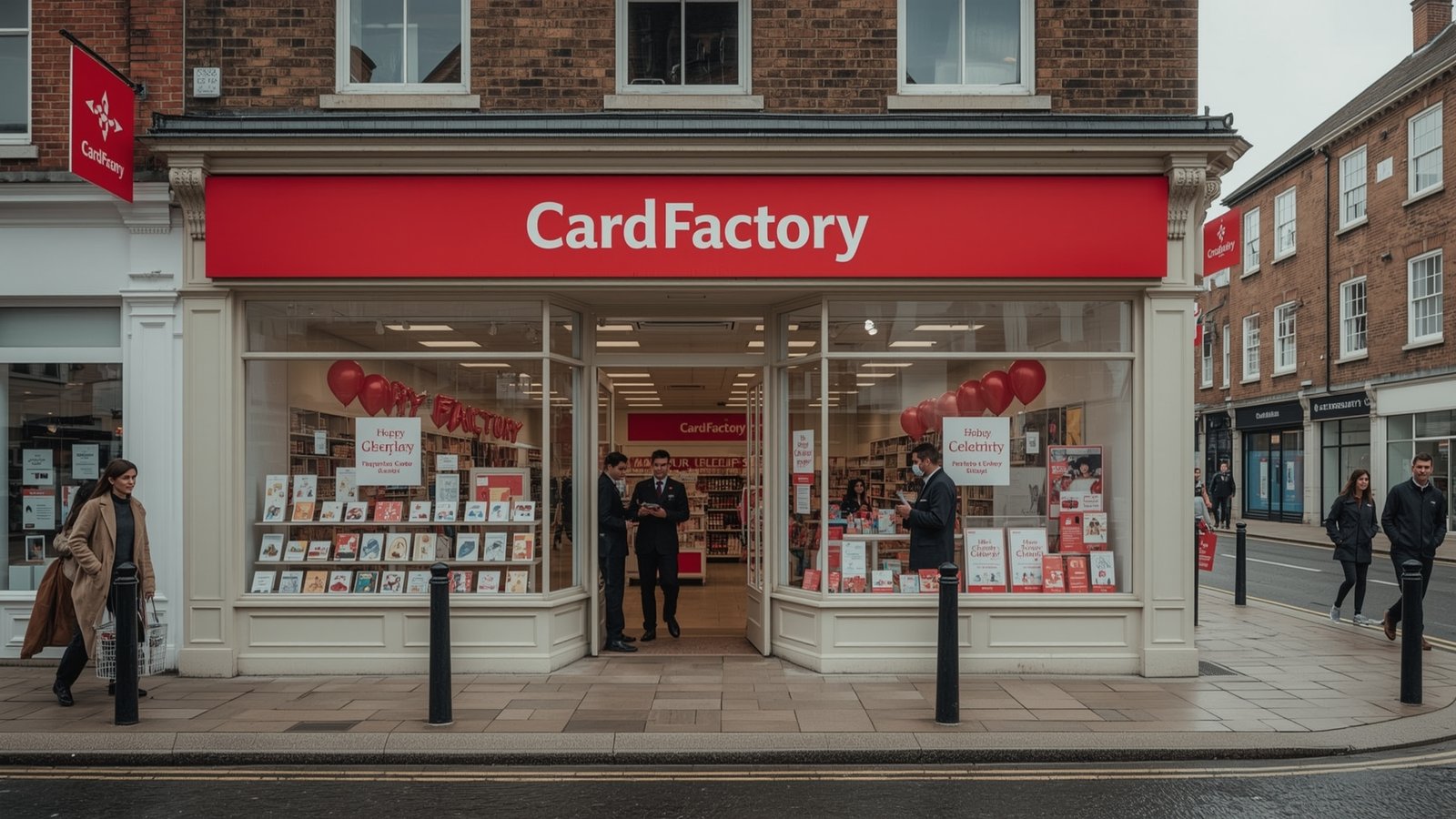
Card Factory is the UK’s largest specialist retailer of greetings cards, gifts and celebration essentials, with 1,117 stores across the UK and Ireland. It started in 1997 with a van full of cards, and it now hires for shop-floor, warehouse, production and office roles — most of them entry-level, with no experience needed.
This guide covers the roles on offer, what they pay, what the work involves, and how to apply on Card Factory’s own careers site. It is a job guide, not a company report: the business background is kept to one short section at the end, with the latest results correctly dated.
ukjobly.com is a guides site, not a job board: it does not list live Card Factory vacancies. Every apply link in this guide goes to Card Factory’s own careers site, where live roles are listed.
Card Factory at a Glance (2026)
| Fact | Detail |
|---|---|
| Stores | 1,117 across the UK and Republic of Ireland (31 January 2026), up 27 net new stores in the year |
| What it sells | Greetings cards, gifts, gift wrap, party supplies and celebration essentials |
| Main roles | Retail sales assistant, store manager, team leader, warehouse operative, card production operator, customer service |
| Experience needed | None for entry-level shop and warehouse roles |
| Where to apply | Card Factory’s own careers site — jobsearch.cfjobs.co.uk |
| Latest results | Revenue £582.7m in the year to 31 January 2026, but pre-tax profit down 31.5% to £43.9m as high-street footfall weakened (see the short company section below) |
The Roles: What You Would Actually Do
- Retail sales assistant: the most common role, and the usual way in. You serve customers, work the till, keep shelves and displays stocked, and help with deliveries. Christmas is the busiest time — Card Factory hires seasonal sales assistants every year for the festive peak, and those roles often suit students and first-time workers.
- Team leader / key holder: you open and close the store, handle the till and cashing-up, and supervise the shop floor when the manager is away. Usually needs some retail experience.
- Store manager: you run a store — staff rotas, stock, targets, and customer service. Needs retail management experience.
- Warehouse operative: based at the distribution centre, you pick, pack and move stock that supplies the stores. Shift work, physical, no experience needed.
- Card production operator: working in the company’s production operation, making and finishing cards and related products. Shift work, no experience needed.
- Customer service and office roles: handling customer queries and supporting the stores from the support centre. Office hours, computer work.
Shifts and what the work feels like
Shop roles run on short part-time contracts — many sales assistants are on 4- or 8-hour contracts, with extra hours available at Christmas. Weekend working is normal, and Sunday shifts are common. The work is fast-paced at peak times (Christmas, Mother’s Day, Valentine’s Day) and quieter in between. Warehouse and production roles run on shifts, including early starts and nights. Card Factory says it offers flexibility where it can — check the hours on the live advert, because they vary by store.
Pay in 2026: What Card Factory Jobs Pay
Card Factory does not publish one hourly rate for its roles, and this guide will not invent one. Here is what can be said honestly:
- The legal floor: if you are 21 or over, your employer must pay at least the National Living Wage — £12.71 an hour from 1 April 2026 (GOV.UK). If you are 18–20, the floor is £10.85 an hour.
- What staff report: on Breakroom, the employee-review site, 98% of Card Factory sales assistants who answered said they are paid below the Real Living Wage for where they live (49 people, March 2025 to March 2026), and most describe their pay as minimum wage. The voluntary Real Living Wage is £13.45 an hour (£14.80 in London). That tells you the honest picture: entry-level shop pay at Card Factory sits at or near the wage floor, not above it.
- What to do: the rate for the exact role is shown on the live vacancy. Read it before you apply, and check whether the contract is 4 hours, 8 hours or more — the hourly rate only tells half the story when the contract is short.
Benefits listed on Card Factory’s own careers site: 25% staff discount at cardfactory, up to 50% off Funky Pigeon, a workplace pension (The People’s Pension), a death-in-service benefit, and retailer discounts through its “My cardfactory” scheme.
The Company in Brief (Not a Job Section)
A short note for context, because the old version of this guide spent most of its words here. Card Factory’s latest full-year results (year ended 31 January 2026, announced 28 April 2026) show revenue of £582.7 million, up 7.4%, but pre-tax profit of £43.9 million, down 31.5%, after weak high-street footfall hit its peak Christmas trading. It opened 27 net new stores in the year, taking the estate to 1,117 stores. The company also owns Funky Pigeon, and has operations in South Africa (SA Greetings), the US (Garvin) and Ireland (Garlanna).
None of that changes what a shop-floor job pays or how to apply for one. It is included here so readers are not misled by the old £65.6 million profit figure, which was the result for the year ended January 2024 — not the latest year.
How to Apply in 5 Steps
- Go to Card Factory’s own careers site. Search live roles on jobsearch.cfjobs.co.uk — filter by keyword (for example “Sales Assistant”) and your town or postcode. Live vacancies change regularly, so check the site itself rather than any list on this page.
- Pick the role and the hours. Read the contract hours on the advert before anything else — many shop roles are 4 or 8 hours a week, with more at Christmas. Check the hourly rate, the shift pattern, and whether weekend working is included.
- Apply online. Applications are made through the careers site. You will need a short CV or an application form with your details, availability and any retail or customer-service experience. No experience is needed for entry-level sales assistant and warehouse roles — say so plainly if you have none, and say you are reliable and available at peak times.
- Prepare for a short interview. Expect questions about customer service, working under pressure at busy times, and your availability — especially weekends and Christmas. A trial shift in store is common for shop roles.
- Get the offer in writing. Check the hourly rate, the contracted hours, the start date and the store location before you accept. If the role is seasonal, check the end date too.
Documents checklist — have these ready
- Photo ID (passport or driving licence) or, if you are not a British or Irish citizen, your share code from your UK visa and immigration account to prove your right to work.
- Your National Insurance number.
- Proof of address (a recent bill or bank statement).
- A short CV — one page is enough for shop and warehouse roles.
- Bank details — only after you have a written offer. Card Factory never asks for money to apply or to start. Any advert asking for a fee in Card Factory’s name is a scam.
Checks & certificates — what is real and what is not
- No fee to apply or start. Card Factory never charges you to apply, to train, or to get a starter kit. Any advert asking for money in Card Factory’s name is a scam.
- Right to work: Card Factory checks your right to work in the UK before your first shift — passport, or a share code if you hold a visa. That check is free and done by the employer, not by a paid third party you are sent to.
- DBS checks: most shop and warehouse roles do not need one. If a specific role genuinely does, Card Factory arranges it through the official route — never pay for a check through a link sent by a “recruiter”.
- Visa sponsorship: do not assume a shop-floor or warehouse role comes with visa sponsorship. Entry-level retail roles generally do not meet the Skilled Worker visa criteria. Check the advert itself — if it does not say sponsorship is available, it is not.
- No certificate is needed to work in a card shop. Anyone who says you must buy a “retail certificate” before you can start is running a scam.
So, Is a Card Factory Job Worth Applying For?
If you want a first job, a part-time job around study, or Christmas work, a Card Factory sales assistant role is a realistic way in: no experience needed, a straightforward online application, and stores in most towns. Go in with your eyes open about the pay — it sits at or near the wage floor, and many contracts are short hours — and read the hours on the advert before you apply. If you need full-time hours and a higher rate, a warehouse operative role or a different retailer may suit you better. Either way, apply on Card Factory’s own careers site, and check the rate and the contracted hours on the vacancy itself. For other no-degree roles, see Amazon warehouse jobs in London and Morrisons delivery driver jobs.
Frequently Asked Questions
What Card Factory jobs are available in 2026?
The main roles are retail sales assistant, team leader, store manager, warehouse operative, card production operator and customer service. Sales assistant is the most common role and the usual way in, with no experience needed.
How much do Card Factory jobs pay?
Card Factory does not publish one hourly rate. The legal floor is the National Living Wage — £12.71 an hour for age 21 and over from 1 April 2026. Employee-reported data on Breakroom shows most sales assistants are paid at or near that floor. Always check the rate and the contracted hours on the live vacancy before you apply.
How do I apply for a Card Factory job?
Apply on Card Factory’s own careers site at jobsearch.cfjobs.co.uk — search by keyword and your town or postcode. Do not apply through a social-media advert or a third party asking for a fee.
Do I need experience to work at Card Factory?
No, not for entry-level sales assistant, warehouse operative or card production roles. Team leader and store manager roles usually need retail experience. A short CV and availability at weekends and Christmas help for shop roles.
Does Card Factory hire seasonal workers for Christmas?
Yes. Card Factory hires seasonal sales assistants every year for the festive peak, and those roles often suit students and first-time workers. Check the contract end date on the advert before you accept.
What benefits do Card Factory staff get?
Listed benefits include 25% staff discount at cardfactory, up to 50% off Funky Pigeon, a workplace pension (The People’s Pension), a death-in-service benefit, and retailer discounts through the “My cardfactory” scheme. Benefits can vary by role and contract — check the advert.
Sources checked: Card Factory plc preliminary results for the year ended 31 January 2026 (LSE RNS, 28 April 2026) — revenue £582.7m, profit before tax £43.9m, 1,117 stores; Card Factory careers site — 389 jobs, benefits, company background (jobsearch.cfjobs.co.uk); GOV.UK — The National Minimum Wage in 2026 (National Living Wage £12.71 an hour from 1 April 2026); Breakroom — Card Factory sales assistant pay reports (March 2025–March 2026). All sources checked 8 November 2026. Figures change — check the linked source before you rely on a number.






One Response